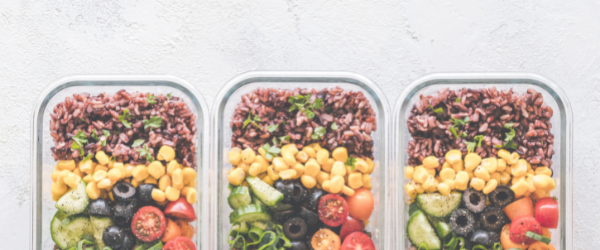

Healthy food swaps replace high-calorie versions of foods you already eat with lower-calorie alternatives. The best swaps save 100–300 calories per change without willpower or formal dieting. Two or three consistent swaps create a 300–500 calorie daily deficit — equivalent to 0.5kg of fat loss per month without changing what meals you eat.
Key Takeaways
- Swapping a daily latte for black coffee saves 925 calories per week — without touching a single meal
- Healthy food swaps work because they lower calorie density without reducing food volume or requiring restriction
- Two or three consistent swaps create a 300–500 calorie daily deficit — enough for steady, sustainable fat loss
- The easiest swap to start with is your daily coffee order — most people adjust to the taste within 2 weeks
Do Healthy Food Swaps Actually Work for Weight Loss?
Yes — and there’s a clear reason why. Healthy food swaps work by reducing calorie density without reducing food volume. You eat the same amount of food. You just eat a version of that food with fewer calories per gram. That’s a fundamentally different mechanism from restriction-based dieting, where you eat less food and feel hungrier.
The behavioural science matters here. Willpower is finite. Any strategy that requires you to override hunger, cravings, or habit on a daily basis will eventually fail — because you’ll have a bad day, a stressful week, or a social event that breaks the pattern. Food swaps sidestep this entirely. Once the new habit is formed, it runs automatically. There’s no daily decision to make.
Revolution PTS clients use this approach because compliance is the only metric that actually matters for long-term fat loss. A 400-calorie daily deficit you maintain for six months beats a 1,000-calorie deficit that lasts three weeks. Swaps compound. Crash diets don’t.
What Are the Best Healthy Food Swaps for Weight Loss?
The highest-impact healthy food swaps target the habits you repeat most often — daily coffee orders, afternoon snacks, side dishes with dinner. These are the areas where a single change creates a compounding saving across every week of the year.
The swaps that consistently produce results fall into three categories: drinks (particularly coffee orders, which are often the single biggest hidden calorie source), snacks (replacing calorie-dense options with high-volume alternatives), and meal components (swapping starchy carbohydrates for vegetable alternatives without losing satiety).
Below are three specific swaps with real calorie figures. Each one is practical, available in any UK supermarket or coffee shop, and backed by the compliance data we see with Revolution PTS clients across our London studios.
Swap 1: Coffee Orders — Save Up to 185 Calories Per Day
A medium semi-skimmed latte from Starbucks contains 190 calories. A medium cappuccino with semi-skimmed milk is 120 calories. A black Americano is 15 calories. If you buy one coffee per day on weekdays, switching from a latte to an Americano saves 175 calories daily — 925 calories over a five-day week, every week, indefinitely.
That’s the equivalent of eliminating one full meal per week without feeling like you’ve restricted anything. You’re still going to the same coffee shop. You’re still ordering a coffee. The only thing that’s changed is what’s in the cup.
If black coffee feels too stark, a flat white with semi-skimmed milk sits at around 110 calories — still an 80-calorie saving over a latte. Adding a splash of oat milk to an Americano adds roughly 20–30 calories while softening the taste considerably. Most people who make this swap report that within 10–14 days, the full-milk latte starts tasting too sweet. Revolution PTS clients who make this one change first report it as the swap they notice least but the one that moves the scale most reliably.
Swap 2: Crisps for Popcorn — Cut Calories Without Losing the Crunch
A standard 35g bag of Walkers ready salted crisps is 184 calories. A 20g bag of Propercorn lightly salted popcorn is 99 calories. The popcorn bag feels larger — more pieces, more volume, more eating time — which matters more than people realise. The satisfaction from a snack comes partly from the act of eating it, not just the calorie content.
The reason crisps are hard to replace isn’t the flavour. It’s the crunch. The auditory and textural feedback of crunching is a significant part of the experience. Popcorn delivers the same crunch stimulus, which is why this swap has unusually high compliance compared to swapping crisps for rice cakes — which most people abandon within a week because the texture is completely different.
Practical tip: buy individual portion packs rather than a large sharing bag. The large bag removes the natural stop signal of finishing a pack. Both Propercorn and Metcalfe’s produce 20–25g snack bags widely available in Sainsbury’s, Waitrose, and most Tesco Express stores. Revolution PTS clients who snack at their desks find this swap easy to sustain because the individual packs work as a built-in portion control mechanism.
Swap 3: Pasta and Rice for Vegetable Alternatives
100g of cooked white pasta is around 160 calories. 100g of courgette spaghetti (courgetti) is 17 calories. 100g of cooked white rice is 130 calories. 100g of cauliflower rice is 25 calories. You can eat four times the volume of a vegetable alternative for the same calorie cost as the starchy original.
This doesn’t mean pasta or rice are bad foods. They’re not. But if you eat large portions and struggle to lose weight despite eating “healthily,” the calorie density of your carbohydrate side dishes is often where the deficit is being erased. Replacing even half your pasta with courgetti and half your rice with cauliflower rice cuts the calorie content of that component by around 60–70% while keeping the plate looking and feeling full.
Where to buy: Tesco, Sainsbury’s, and Waitrose all stock pre-prepared cauliflower rice and courgetti in the fresh vegetable section — typically priced between £1.50 and £2.50 per 300g pack. Revolution PTS clients at our City studio, who typically have limited lunch prep time, use microwave cauliflower rice as the default base for lunchtime stir-fries and Buddha bowls. The slight loss of texture compared to home-spiralised courgette is worth the time saving for most people.
How Many Calories Do Healthy Food Swaps Save?
Aggregating the three swaps above, assuming daily implementation:
Coffee swap (latte to Americano): 175 calories saved per day. Crisp to popcorn swap: 85 calories saved per snack. Pasta portion swap (half courgetti): approximately 70 calories saved per dinner. Combined daily saving: 330 calories. Weekly saving: 2,310 calories. Monthly saving: approximately 9,240 calories — equivalent to roughly 1.2kg of fat.
Compare this to a typical crash diet: a 1,000-calorie daily deficit is aggressive, feels punishing, and in clinical studies produces metabolic adaptation and muscle loss within weeks. Most people abandon it within a month. The swap-based 330-calorie deficit is sustainable indefinitely because it doesn’t require ongoing effort once the habits are formed.
The compounding effect over six months: 330 calories daily × 180 days = 59,400 calories saved. At 7,700 calories per kilogram of fat, that’s approximately 7.7kg of fat loss — achieved without a single day of feeling deprived. That’s the case for healthy food swaps in a single calculation.
Which Healthy Food Swap Should You Start With?
Start with the coffee swap. It’s the highest per-day calorie saving of the three, requires the least behavioural change (same shop, same time, different order), and has the fastest habit formation timeline. Most people are comfortable with an Americano or flat white within two weeks.
Once the coffee swap is automatic — meaning you don’t think about it, you just order — add the snack swap. Replace your daily crisp habit with popcorn. Give it two weeks. Don’t move to the next swap until the current one feels completely effortless.
Then add the carbohydrate swap. Start with just one meal per day — typically dinner, where you have control over what you cook. Replace half the rice or pasta with a vegetable alternative. Once that’s comfortable, extend it to lunch.
The sequential approach matters. Trying to implement all three swaps simultaneously increases cognitive load and makes each swap feel like a restriction rather than a simple preference change. Revolution PTS coaches use this step-by-step approach with every client who starts a fat loss phase — not because three swaps at once won’t work, but because one swap at a time has a substantially higher long-term retention rate. After three months, clients who stacked swaps gradually are still doing all three. Clients who implemented everything at once often retain one or none.
How many calories do food swaps actually save?
Swapping a daily latte for black coffee saves around 185 calories. Swapping crisps for popcorn saves 50–80 calories per serving. Swapping pasta for courgetti saves 60–80 calories per 100g. Combined, two or three consistent swaps can save 300–500 calories per day — enough to create a meaningful fat loss deficit without any formal dieting.
Are food swaps better than calorie counting?
For most people, yes. Calorie counting is accurate but requires consistent effort and can create an unhealthy relationship with food. Food swaps create the same deficit passively — once the new habit is established, it requires no ongoing tracking. The best approach is often both: use swaps as the default behaviour, use calorie tracking occasionally to check your baseline is where you think it is.
What is the 3-3-3 rule for losing weight?
The 3-3-3 rule for weight loss means eating three meals per day, with three food groups per meal (protein, fat, carbohydrate), no more than three hours apart. It’s a loose framework for maintaining blood sugar stability and preventing the hunger spikes that lead to overeating. It’s not a rigid protocol — just a way to structure eating without tracking every calorie.
Do I need to follow a specific diet to see results from food swaps?
No. Food swaps work within any dietary framework — including no framework at all. The principle is simply replacing higher-calorie versions of foods you already eat with lower-calorie alternatives. You don’t need to follow keto, paleo, or any named diet. The swap approach works precisely because it doesn’t require a diet mentality.
What is the easiest food swap to start with?
The coffee swap is the easiest and highest-impact starting point for most people. Switching from a daily latte to a black coffee or Americano saves 150–185 calories with minimal behavioural change — you’re still going to the same coffee shop, just ordering differently. Most people adjust to the taste within 7–14 days.
Can food swaps alone help me lose weight without exercise?
Yes — if the swaps create a sufficient calorie deficit. A 500-calorie daily deficit leads to approximately 0.5kg of fat loss per week. Food swaps alone can achieve this. However, combining food swaps with resistance training produces better body composition results — more muscle retained, more fat lost — than diet alone. Exercise also makes it easier to maintain the deficit long-term.
Sources
- Hall, K.D. et al. (2012). Calorie for calorie, dietary fat restriction results in more body fat loss than carbohydrate restriction. Cell Metabolism.
- Starbucks UK nutritional information (2025). Available at starbucks.com/nutrition.
- British Nutrition Foundation (2024). Practical approaches to calorie reduction. bnf.org.uk.