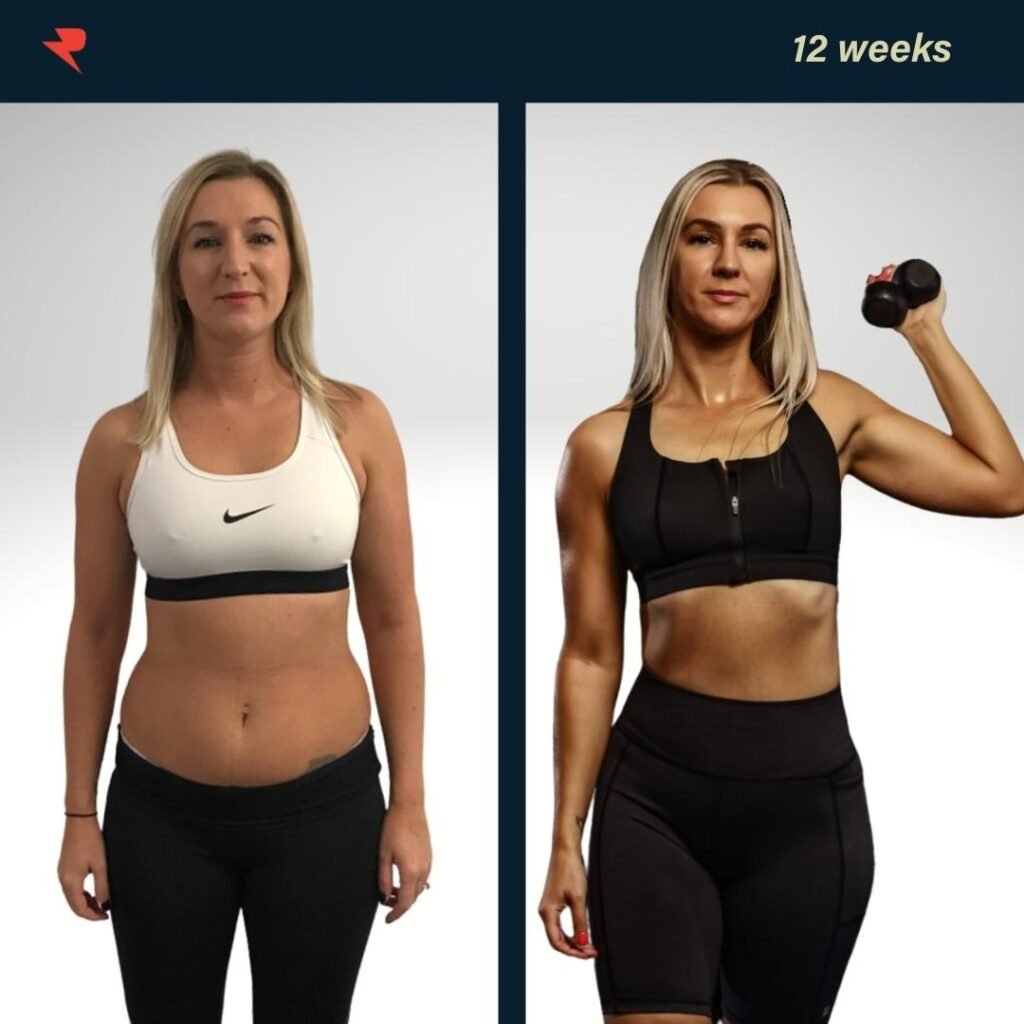
Hannah lost almost 10% body fat and over 10 kg in a 12-week personal training programme at Revolution PTS, initially to prepare for her wedding. A structured 12-week transformation combines progressive resistance training, nutritional guidance, and regular assessments to produce measurable changes in body composition. Hannah enjoyed the experience so much that she continued training for nearly four years.
Key Takeaways
- Hannah lost almost 10% body fat and over 10 kg in just 12 weeks of personal training
- A structured 12-week programme with clear goals and professional support produces measurable results
- The training experience was enjoyable enough that Hannah continued for nearly four years after her initial programme
- Finding a trainer who makes exercise enjoyable is key to long-term adherence — Hannah described it as training ‘with a group of friends’
- 12-week transformations work best when they combine resistance training with nutritional guidance and regular progress tracking
My 12 week transformation with Revolution got me into amazing shape for my wedding – I dropped almost 10% body fat and lost over 10kg.
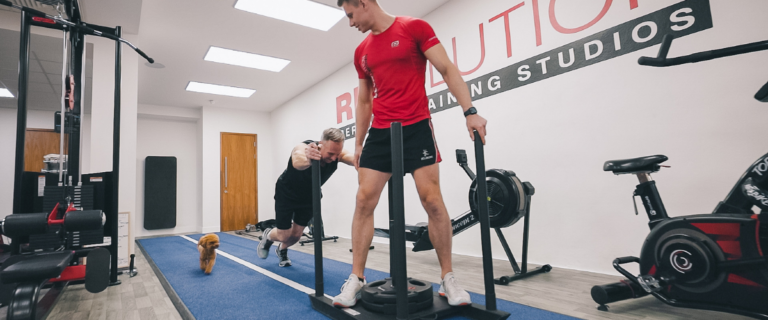
Although I’d only planned to train at Revolution for 12 weeks, I loved it so much that nearly four years later I’m still here! My trainer, Will, has taught me enjoy exercise for the first time in my life and the results have been incredible.
Training at Revolution is like being with a group of friends – you’re having such a good time that you forget you’re even working out! I can’t imagine my life without Revolution now.
What Does a 12-Week Body Transformation Involve?
A 12-week transformation programme is one of the most popular and effective approaches to achieving significant changes in body composition. The timeframe is long enough to produce visible results while being short enough to maintain motivation and focus. Here is what a typical 12-week programme involves:
- Weeks 1–2 (Assessment and Foundation): Your trainer conducts a thorough assessment including body weight, body fat percentage, measurements, and fitness testing. A personalised training programme and nutritional plan are created based on your starting point and goals
- Weeks 3–6 (Building Habits): Training intensity increases progressively. You develop consistent exercise and eating habits. Regular check-ins monitor progress and allow adjustments to the programme
- Weeks 7–10 (Acceleration): With a solid fitness base established, training volume and intensity can be increased further. Nutritional fine-tuning may occur based on progress data
- Weeks 11–12 (Peak and Reassessment): Final push toward your goal, followed by a comprehensive reassessment comparing your results to your starting measurements
The Science Behind 12-Week Body Composition Changes
Research supports the 12-week timeframe as highly effective for body recomposition. A study published in the British Journal of Sports Medicine found that structured resistance training programmes of 8–12 weeks produced significant reductions in body fat percentage alongside increases in lean muscle mass.
The ACSM notes that for fat loss specifically, a combination of resistance training and cardiovascular exercise, paired with a moderate calorie deficit (300–500 calories per day below maintenance), produces optimal results. This approach preserves muscle mass while promoting fat loss — which is why Hannah’s results showed such a significant drop in body fat percentage rather than just scale weight.
Key physiological changes during a 12-week programme include:
- Weeks 1–4: Neuromuscular adaptations — your nervous system becomes more efficient at recruiting muscle fibres, leading to rapid strength gains even before visible muscle growth
- Weeks 4–8: Metabolic adaptations — improved insulin sensitivity, increased mitochondrial density, and enhanced fat oxidation during exercise
- Weeks 8–12: Structural adaptations — measurable increases in muscle mass and significant reductions in body fat, producing visible changes in body shape and composition
Why People Continue Training After Their Initial Transformation
Hannah’s experience of continuing to train nearly four years after her initial 12-week programme is common among transformation clients. The NHS recognises that regular physical activity has wide-ranging benefits beyond body composition, including improved mental health, better sleep quality, reduced risk of chronic disease, and increased energy levels.
Once clients experience these broader benefits — and particularly when they find a training environment they enjoy — exercise transitions from something they “have to do” into something they choose to do. This shift from extrinsic to intrinsic motivation is what the exercise psychology literature identifies as the key to lifelong physical activity.
Frequently Asked Questions
How much body fat can you lose in 12 weeks?
Results vary by individual, but with consistent training and nutritional guidance, losing 5–10% body fat in 12 weeks is achievable. Hannah lost almost 10% body fat in her programme. The ACSM recommends a fat loss rate of 0.5–1% of body weight per week for sustainable results that preserve muscle mass.
Is 12 weeks long enough to see real results from personal training?
Yes. Research published in the British Journal of Sports Medicine shows that 8–12 weeks of structured resistance training produces significant improvements in body composition, strength, and cardiovascular fitness. Most clients see noticeable visual changes by weeks 6–8.
Do I need to train every day for a 12-week transformation?
No. Most 12-week programmes involve 3–4 structured training sessions per week with rest days for recovery. The ACSM recommends at least 48 hours between resistance training sessions targeting the same muscle groups. Additional light activity such as walking on rest days supports recovery and overall calorie expenditure.
What happens after a 12-week transformation programme ends?
Many clients transition to a maintenance programme with reduced frequency (2–3 sessions per week) to sustain their results. Like Hannah, some continue with progressive training to pursue new goals. The key is maintaining the exercise habit — the NHS recommends ongoing physical activity as a lifelong practice for health.
How did Hannah’s body composition change during her transformation?
Hannah lost almost 10 percent body fat and over 10 kg in her 12-week programme. Her results reflected genuine body recomposition rather than just scale weight loss, which is why tracking body fat percentage alongside weight provides a more accurate picture of progress during a transformation.
What motivated Hannah to continue training after her initial 12-week goal?
Although Hannah originally planned to train for just 12 weeks to prepare for her wedding, she enjoyed the experience so much that she was still training nearly four years later. She described the environment as being like training with a group of friends, highlighting how a positive training atmosphere drives long-term adherence.
What physiological changes happen during each phase of a 12-week programme?
During weeks one to four, neuromuscular adaptations improve your body’s ability to recruit muscle fibres, producing rapid strength gains. Weeks four to eight bring metabolic adaptations including improved insulin sensitivity and enhanced fat oxidation. Weeks eight to twelve produce structural changes with measurable increases in muscle mass and significant reductions in body fat.
Sources & References
- British Journal of Sports Medicine — Research on body composition changes during 8–12 week structured resistance training programmes
- American College of Sports Medicine (ACSM) — Guidelines on optimal training frequency, calorie deficit, and fat loss rates for body recomposition
- NHS Physical Activity Guidelines — Recommendations for ongoing physical activity and its broader health benefits beyond body composition