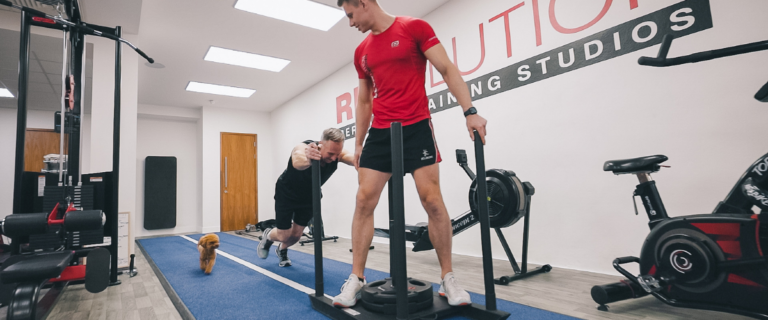

For most people seeking lasting body composition changes, a personal trainer is the stronger choice. Trainers deliver hands-on coaching, real-time form correction, and progressive programming that addresses both fitness and nutrition. Weight loss coaches are better suited to those whose primary barrier is behavioural or emotional eating rather than exercise technique.
Key Takeaways
- Personal trainers combine exercise programming, form correction, and nutritional guidance in one service
- Weight loss coaches focus on mindset, habits, and nutrition but rarely provide structured physical training
- UK personal trainers hold a minimum Level 3 Diploma and register with REPs or CIMSPA
- For long-term body composition results, progressive resistance training supervised by a PT is the most evidence-based approach
- A free taster session helps you assess which type of support matches your goals
When you’re ready to make a change, the first step can be the hardest: figuring out where to start. Should you hire a personal trainer near you? Or would a weight loss coach be better?
Both promise transformation, but they offer very different approaches. This guide is your decision-making companion, designed to help you confidently choose the right support based on your goals, preferences, and budget.
But if you want the most all-encompassing, actionable, and personally guided approach—a personal trainer is still the gold standard.
Key Takeaways:
- Personal trainers offer hands-on training, detailed form correction, and expert workout programming—ideal for fitness, strength, and weight loss.
- Weight loss coaches focus on nutrition, habits, and mindset—but often lack the depth in physical training.
- PTs offer comprehensive guidance: workouts, accountability, and nutritional coaching—all in one place.
- While both offer benefits, personal training is the most rounded solution for long-term transformation and consistent progress.
What Does a Personal Trainer Do?
Personal trainers are fitness professionals who specialise in physical transformation through structured, progressive training. At studios like Revolution PTS, PTs work closely with clients to build programs that align with both body and lifestyle.
Primary Responsibilities:
- Design tailored strength and cardio programmes
- Teach and correct proper form and movement technique
- Guide progressive overload for long-term strength and fat loss
- Track physical progress in detail (not just weight)
- Provide general nutritional guidance within scope
Unlike weight loss coaches, personal trainers don’t just “check in”—they’re by your side. Real-time feedback and form correction are invaluable when building a foundation that lasts.
Qualifications: UK PTs typically hold a Level 3 Diploma in Personal Training and are registered with organisations like:
- REPs (Register of Exercise Professionals)
- CIMSPA (Chartered Institute for the Management of Sport and Physical Activity)
What Does a Weight Loss Coach Do?
Weight loss coaches support clients with the mental, emotional, and behavioural side of fat loss. Their work often includes:
- Nutrition and meal planning support
- Habit and lifestyle coaching
- Emotional eating strategies
- Accountability and mindset coaching
Many coaches work online and focus less on movement or form correction. While they provide excellent behavioural insights, they may lack the physical programming expertise a PT brings to the table.
Key Differences at a Glance
FactorPersonal TrainerWeight Loss CoachFocusStrength, fitness, body compNutrition, mindset, habitsDeliveryIn-person, 1:1 or small groupMostly online/hybridAccountabilityLive coaching, hands-onMessaging, check-insTraining ExpertiseHigh (Level 3+)Varies (non-regulated)NutritionGeneral guidanceIn-depth (non-clinical)Best ForHolistic, physical resultsHabit-based behaviour change
Why Personal Training Wins Long-Term
While weight loss coaches can help address the “why” behind habits, personal trainers take you from intention to action—safely and effectively.
At Revolution PTS, personal training clients get more than just a workout. They get:
- Deep technical coaching: Understand reps, sets, tempo, and form.
- Real-time adjustments: Your program evolves with your progress.
- Nutritional coaching: Integrated into your training journey, not separate.
- Total support: One coach for fitness, form, motivation, and food.
“When clients work with one trusted coach for both fitness and nutrition, they make faster, more sustainable progress. It’s the consistency that changes everything,” says Rob Grim, CEO of Revolution PTS.
Cost Comparison & Long-Term Value
ServiceTypical Cost (UK)ValuePersonal Training£30–£80/session1:1 attention, detailed programmingWeight Loss Coaching£39–£299/monthNutrition and mindset, often online onlyHybrid£219/month (avg)Best of both, if budget allows
The price per session may seem higher for PTs, but the return—better technique, fewer injuries, real-time accountability—is unmatched.
When to Choose a Personal Trainer
Choose a PT if:
- You’re new to exercise and want to build confidence and competence
- You want to improve your form, avoid injury, and get stronger
- You want face-to-face accountability and support
- You want one expert guiding your fitness and nutrition
When to Choose a Weight Loss Coach
Consider a weight loss coach if:
- You’re mostly struggling with food, mindset, and routine
- You prefer remote check-ins and flexible support
Consider Both If You:
- Have the budget for full support
- Want expert help on both movement and mindset
- Are committed to long-term, sustainable transformation
Still Unsure?
Start with a free consultation or taster session. At Revolution PTS, we help you assess your starting point, goals, and lifestyle to recommend the most efficient path forward.
For most people, a personal trainer offers the most direct, well-rounded route to visible, sustainable results.
Ready to make progress that lasts?Book your free taster session and experience the Revolution difference firsthand.
Meet Our Personal Trainers | See Real Client Transformations | Explore the Blog
How to Choose the Right Personal Trainer for You
Finding the right PT goes beyond checking qualifications. Consider their communication style, specialist experience, and training environment. A good trainer will listen to your goals, conduct a thorough initial assessment, and explain the reasoning behind your programme. Ask about their experience with clients who share your goals — whether that is weight loss, strength building, or rehabilitation after injury.
Training environment matters too. Private studios offer a focused, distraction-free setting that many clients prefer over crowded commercial gyms. At Revolution PTS, sessions take place in private studios across London, giving clients the space and attention needed to train with confidence.
The Role of Progressive Overload in Long-Term Results
One of the key advantages of working with a personal trainer is access to structured progressive overload — the systematic increase of training demands over time. According to the American College of Sports Medicine (ACSM), progressive overload is the foundational principle behind strength and muscle adaptation. Without it, the body plateaus and improvements stall.
A qualified PT monitors your performance each session, adjusting weights, volume, and intensity to ensure continued progress. This level of precision is difficult to achieve through self-directed training or remote coaching alone, and it is one of the primary reasons supervised training consistently outperforms unsupervised approaches in research.
Frequently Asked Questions
What qualifications should a personal trainer have in the UK?
A qualified UK personal trainer holds at least a Level 3 Diploma in Personal Training and should be registered with REPs (Register of Exercise Professionals) or CIMSPA (Chartered Institute for the Management of Sport and Physical Activity). These registrations confirm the trainer meets industry-recognised standards for exercise instruction and client safety.
Can a weight loss coach write me a training programme?
Most weight loss coaches focus on nutrition, habits, and mindset rather than exercise programming. While some may suggest general activity guidelines, they typically lack the formal qualifications to design progressive resistance training plans or correct lifting technique. If structured training is important to you, a personal trainer is better placed to help.
Is a personal trainer worth the cost compared to online coaching?
In-person personal training usually costs more per session, but it provides real-time form correction, immediate programme adjustments, and face-to-face accountability that online coaching cannot replicate. Research published in the Journal of Sports Science and Medicine found that supervised training produces greater strength and fitness gains than unsupervised programmes.
How often should I train with a personal trainer?
Most clients see strong results training with a PT two to three times per week. This frequency allows adequate recovery between sessions while maintaining enough training stimulus for progressive improvement. Your trainer will adjust the frequency based on your goals, fitness level, and schedule.
Do personal trainers provide nutrition advice?
Qualified personal trainers can offer general nutritional guidance within their scope of practice, including advice on meal timing, protein intake, and calorie balance. For clinical dietary needs or medical conditions, they will refer you to a registered dietitian or nutritionist.
What results can I expect from a 12-week programme with a PT?
Results vary depending on starting fitness, consistency, and nutrition. Most clients following a structured 12-week programme with a PT can expect measurable improvements in strength, body composition, energy levels, and confidence. Tracking progress through measurements, photos, and performance records gives a fuller picture than the scale alone.
Can I combine a personal trainer and a weight loss coach?
Yes. Some people benefit from having a PT handle their training and a weight loss coach support their nutritional habits and mindset. If budget allows, this combination can address both physical programming and behavioural change. However, many personal trainers already integrate nutritional coaching into their service.
What is the difference between a PT and a fitness instructor?
A fitness instructor typically holds a Level 2 qualification and leads group exercise classes. A personal trainer holds a Level 3 Diploma and is qualified to design individualised programmes, conduct fitness assessments, and provide one-to-one coaching. The PT qualification covers anatomy, physiology, and programme design in greater depth.
Sources & References
- CIMSPA — Chartered Institute for the Management of Sport and Physical Activity — UK governing body for sport and physical activity professionals, setting workforce standards for personal trainers and fitness instructors.
- REPs — Register of Exercise Professionals — Independent public register of exercise professionals in the UK, verifying qualifications and continuing professional development.
- Journal of Sports Science and Medicine (2012) — Research comparing supervised versus unsupervised exercise training, showing supervised training produces significantly greater improvements in strength outcomes.
- NICE — Physical Activity Guidelines (2024) — National Institute for Health and Care Excellence guidance recommending adults perform muscle-strengthening activities on at least two days per week.