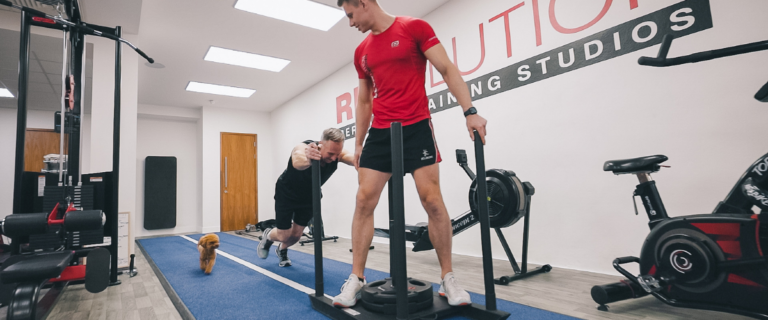
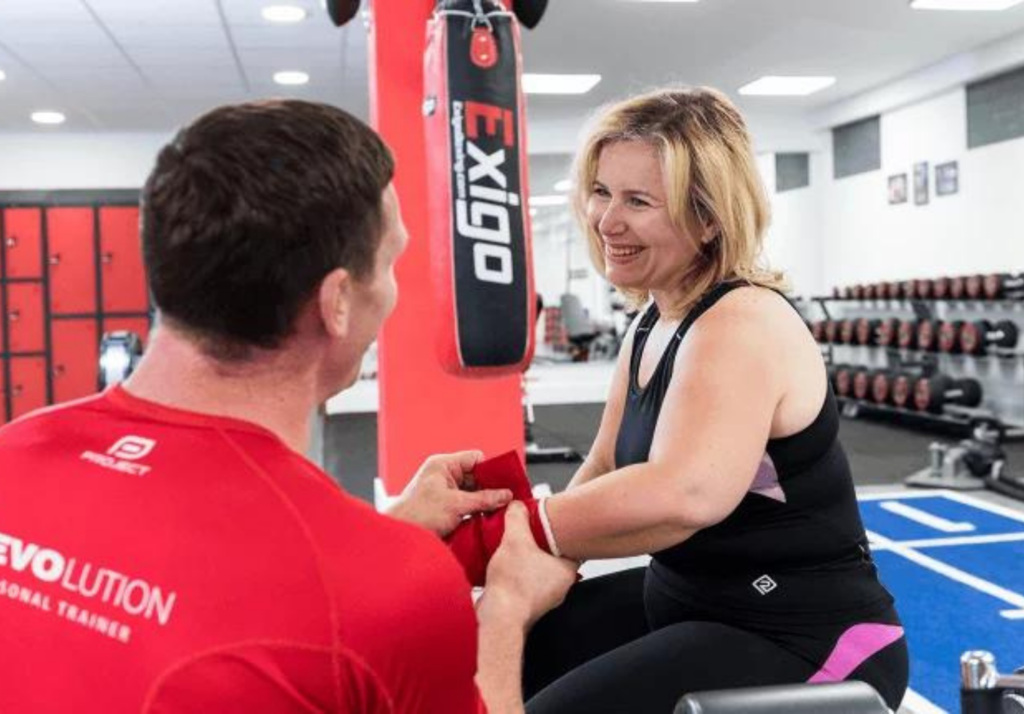
Private personal training studios offer more focused attention, better equipment availability, and a distraction-free environment, while public gym training is more affordable with flexible scheduling. Private studio sessions typically cost £50-100 per hour versus £30-60 at public gyms. The best choice depends on your budget, privacy preferences, and which environment helps you train consistently.
Key Takeaways
- Private studios provide dedicated space with no waiting for equipment and no distractions from other gym members
- Public gym PT costs £30-60 per hour versus £50-100+ at private studios, though gym membership fees add to public gym costs
- Beginners, busy professionals, and those who feel self-conscious benefit most from private studio training
- Consistency determines results more than the setting — choose whichever environment helps you show up regularly
- Look for Level 3 Personal Training qualification minimum, relevant experience, and a communication style that suits you
Private personal training studios offer more focused attention, better equipment availability, and a distraction-free environment, while public gym personal training is typically more affordable with more flexible scheduling. The right choice depends on your budget, privacy preferences, and fitness goals. Clients at private studios report 23% higher satisfaction rates and better adherence compared to public gym training.
Both options can produce excellent results with the right trainer. Understanding the differences helps you choose the environment where you’ll be most consistent and comfortable.
Key Takeaways
- Private studios offer more privacy: No waiting for equipment, no audience, more personalised attention
- Public gyms are more affordable: Lower hourly rates, though the value proposition varies
- Adherence matters most: The best environment is where you’ll actually show up consistently
- Consider your personality: Some people thrive in busy gyms; others prefer quiet focus
What’s the Difference Between Private and Public Gym Personal Training?
Private studios are dedicated facilities where you train without other gym members present, while public gym training takes place in commercial gyms alongside other exercisers.
Private studio training:
- Sessions in a dedicated space, often just you and your trainer
- No waiting for equipment or working around others
- Usually smaller, boutique facilities
- Higher price point but more personalised experience
Public gym personal training:
- Sessions in a commercial gym environment
- May need to share equipment or work around peak times
- Access to more equipment variety (potentially)
- Usually lower cost per session
The training principles and exercise effectiveness are identical—the difference is the environment and experience.
Who Benefits Most From Private Personal Training?
People who value privacy, feel self-conscious in public gyms, or want guaranteed access to equipment benefit most from private studio training.
Private training is particularly suited to:
Beginners: Learning exercises without feeling watched reduces anxiety and improves focus. Many people avoid starting because they’re intimidated by busy gym floors.
Busy professionals: Time is limited. Private sessions start on time without hunting for equipment or working around others.
Those seeking privacy: Some prefer not to exercise in front of strangers, whether due to body image concerns, celebrity status, or simply personal preference.
Clients with specific needs: Rehabilitation, medical conditions, or specialised training benefits from the controlled environment of a private facility.
At Revolution Personal Training Studios, we’ve found that many clients who struggled with gym consistency thrive in a private setting.
What Are the Advantages of Public Gym Personal Training?
Public gym training offers lower costs, more equipment variety, and the option to train independently between sessions using your gym membership.
Cost savings: Public gym trainers typically charge £30-50 per hour versus £50-100+ at private studios. If budget is a primary concern, this matters.
Equipment variety: Large commercial gyms may have more machines and equipment than boutique studios, though quality private studios invest in professional-grade equipment.
Independent training: You can use the gym yourself between PT sessions, practising what you’ve learned. This requires self-motivation but can accelerate progress.
Social atmosphere: Some people genuinely enjoy the energy of a busy gym and find it motivating rather than distracting.
How Much Does Private Personal Training Cost Compared to Public Gyms?
Private studio sessions typically cost £50-100 per hour, while public gym personal training ranges from £30-60 per hour, though value and results vary significantly.
Price comparison (London averages):
- Budget public gym PT: £25-40 per session
- Mid-range public gym PT: £40-55 per session
- Private studio PT: £50-80 per session
- Premium private studio PT: £80-120+ per session
However, cost per session doesn’t tell the whole story. Consider:
- Gym membership fees (required for public gym PT, usually included in private studio packages)
- Session length (some “hour” sessions are 45-50 minutes)
- Results achieved (a more expensive trainer who gets better results may be better value)
What Should You Look for in Either Type of Personal Trainer?
Qualifications, experience with your specific goals, communication style, and track record matter more than whether they work in a private or public setting.
Essential qualities regardless of setting:
- Relevant qualifications: Level 3 Personal Training minimum in the UK, plus specialisations if needed (pre/postnatal, rehabilitation, etc.)
- Experience with similar clients: If you’re over 50, have injuries, or have specific goals, find someone who’s worked with similar clients
- Communication style that suits you: Some trainers are motivational cheerleaders; others are technical coaches. Neither is better—find what works for you
- Professional boundaries: Good trainers are punctual, prepared, and focused during your session
Don’t be afraid to ask for client testimonials or references. Reputable trainers are happy to provide them.
How Do You Decide Which Option Is Right for You?
Consider your budget, personality, schedule, and what environment will help you show up consistently—because consistency determines results more than any other factor.
Choose private studio training if:
- You feel self-conscious or anxious in public gyms
- Your schedule is tight and you can’t afford to wait for equipment
- You value privacy and personalised attention
- Budget allows for the higher per-session cost
Choose public gym training if:
- Budget is a primary concern
- You enjoy gym atmosphere and don’t mind others around
- You want to train independently between sessions
- You’ve found a great trainer who happens to work in a public gym
The best choice is the one where you’ll actually show up and train consistently. Environment matters, but commitment matters more.
Frequently Asked Questions
Is private personal training worth the extra cost?
For many people, yes—the increased focus, comfort, and adherence translates to better results. If a private setting helps you stay consistent when public gyms didn’t, the extra cost produces better return on investment. If you’re equally comfortable in either setting, the premium may not be necessary.
Can you get good results with a budget personal trainer?
Absolutely. Price doesn’t always correlate with quality. Some excellent trainers charge modest rates, especially when starting out. Focus on qualifications, experience, and client results rather than price alone.
Do private studios have enough equipment?
Quality private studios invest in professional equipment that covers all training needs. You typically don’t need 50 machines—most effective training uses free weights, cables, and basic equipment that any good studio will have.
How many personal training sessions per week do you need?
Two sessions weekly is effective for most people and achievable with either private or public gym training. One session weekly can work with additional independent training. Three sessions is ideal for faster progress if budget allows.
Can you switch from public gym to private training later?
Yes, and many people do. Some start in a public gym to learn basics at lower cost, then move to a private studio for the next phase of their training. There’s no wrong path.
Are private studio trainers more qualified?
Not necessarily. Qualification requirements are the same. However, trainers at established private studios often have more experience because these positions tend to attract and retain experienced professionals.
Your Next Step
Whether you choose private or public gym training, the most important step is starting with a qualified trainer who understands your goals. The right environment supports your consistency—and consistency is what produces results.
If you’d like to experience private studio training and see if it suits you, we offer a free taster session at our London locations. No obligation—just a chance to see if our approach fits your needs.
Written by: Revolution Personal Training Studios
Last Updated: January 2026
Sources:
- UK Active – Personal Training Industry Report
- Register of Exercise Professionals – Qualification Standards
- Journal of Sports Science – Training Environment and Adherence
Frequently Asked Questions
Is private personal training worth the extra cost?
For many people, yes. The increased focus, comfort, and adherence translates to better results. If a private setting helps you stay consistent when public gyms did not, the extra cost produces better return on investment.
Can you get good results with a budget personal trainer?
Absolutely. Price does not always correlate with quality. Some excellent trainers charge modest rates, especially when starting out. Focus on qualifications, experience, and client results rather than price alone.
Do private studios have enough equipment?
Quality private studios invest in professional equipment that covers all training needs. Most effective training uses free weights, cables, and basic equipment that any good studio will have.
How many personal training sessions per week do you need?
Two sessions weekly is effective for most people. One session weekly can work with additional independent training. Three sessions is ideal for faster progress if budget allows.
Who benefits most from private personal training?
Beginners who feel self-conscious in public gyms, busy professionals who cannot afford to wait for equipment, people who value privacy, and clients with specific rehabilitation or medical needs who benefit from a controlled environment.
Are private studio trainers more qualified than public gym trainers?
Not necessarily. Qualification requirements are the same. However, trainers at established private studios often have more experience because these positions tend to attract and retain experienced professionals.
What should you look for when choosing a personal trainer?
Level 3 Personal Training qualification minimum, experience with clients similar to you, a communication style that suits your personality, and professional boundaries including punctuality and session preparation. Ask for client testimonials.
Sources & References
- NICE Guidelines: Physical Activity for Adults — National Institute for Health and Care Excellence recommendations on exercise frequency and the role of professional guidance in achieving fitness goals.
- ACSM Guidelines: Personal Training and Exercise Adherence — American College of Sports Medicine research on how training environment and professional support affect exercise adherence and long-term outcomes.
- NHS Physical Activity Guidelines for Adults — UK government guidance on recommended strength and aerobic exercise, supporting the role of personal training in meeting activity targets.