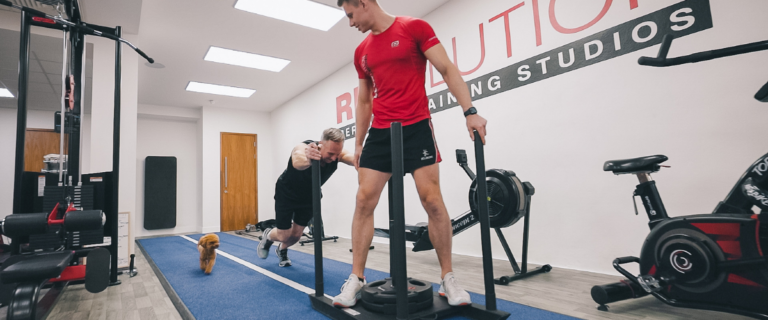

Sara lost over 5 stone in 12 months through consistent personal training and nutritional guidance at Revolution PTS. Her transformation involved progressive resistance training, dietary analysis, and ongoing accountability — demonstrating that sustainable weight loss is achievable with the right professional support and a structured programme.
Key Takeaways
- Sara lost over 5 stone (from 17 stone) in 12 months with consistent personal training
- Nutritional analysis and dietary adjustments were key to maximising weight loss alongside training
- Starting fitness levels do not determine outcomes — Sara could barely balance on a treadmill initially and now enjoys road running
- A supportive training environment with accountability from a personal trainer helps sustain long-term motivation
- Sustainable weight loss combines progressive exercise with gradual dietary changes rather than extreme approaches
Check out Sara’s awe inspiring weight loss journey which took her 12 months of focused training with us. What a transformation!
Before I started at revolution I was a 17 stone cliche, kidding myself that I was one of those fat and happy people that diets and exercise just don’t work for. With hindsight I was clearly in denial and within a month of making that 1st terrifying (it wasn’t but I thought it would be) call to revolution there were visible improvements prompting encouraging comments from friends, family, colleagues and even my personal trainer!
At revolution it’s not just about losing weight. My shape is better than it was as a teenager and I can honestly say it never felt that difficult. To start I could barely barely balance on treadmill and now I enjoy road running! I’ve enjoyed friendly support the whole way through from the staff at revolution, great banter with my personal trainer and even made some good friends along the way.
One of the most valuable benefits of joining revolution is the analysis of my diet. I was never unhealthy as such but my personal trainer really helped me to shift a few things that maximised the weight loss with a view to sustaining my target weight.
It’s difficult to articulate how much I have benefited from Revolution PTS without getting schmaltzy… they are great guys who do their jobs brilliantly and effortlessly and achieve great results tailored to each individual. Revolution has a fun and genuinely supportive atmosphere and I can’t now work out why I put off calling them for so long!
#personaltraining #weightloss #youcandoit
What Makes a Weight Loss Transformation Programme Effective?
Sara’s experience reflects what exercise science research consistently shows about successful long-term weight loss. The National Institute for Health and Care Excellence (NICE) guidelines on obesity management recommend a combination of dietary modification, increased physical activity, and behavioural support — all three elements were present in Sara’s programme.
Key factors that contribute to successful transformations include:
- Professional accountability: Research published in the Journal of Medical Internet Research (2019) found that individuals who trained with a personal trainer or coach were significantly more likely to adhere to their exercise programme over 12 months compared to those exercising independently
- Progressive overload: Gradually increasing exercise intensity builds fitness over time, as Sara experienced when she progressed from struggling on a treadmill to enjoying road running
- Nutritional guidance: The ACSM notes that exercise alone typically produces modest weight loss; combining training with dietary changes produces substantially greater results
- Sustainable pacing: Sara’s weight loss of approximately 1 lb per week aligns with NHS recommendations for safe, sustainable weight loss (0.5–1 kg per week)
The Role of Nutrition in Long-Term Weight Loss
Sara’s story highlights how dietary analysis can be a turning point. Many people eat reasonably well but have specific habits or portion sizes that prevent weight loss. A personal trainer who provides nutritional guidance can identify these patterns and make targeted adjustments.
According to the British Dietetic Association, the most effective dietary approaches for weight loss are ones that individuals can maintain long-term rather than extreme short-term diets. This aligns with Sara’s experience — she described the process as never feeling “that difficult,” which suggests her dietary changes were sustainable rather than restrictive.
Common nutritional adjustments that support weight loss include increasing protein intake to preserve muscle mass during a calorie deficit, timing carbohydrates around training sessions for energy, and reducing liquid calories from alcohol and sugary drinks.
How to Start Your Own Weight Loss Transformation
If Sara’s story resonates with you, the first step is understanding that your starting point does not determine your outcome. The NHS recommends beginning any weight loss journey with realistic goal-setting and professional support where possible. Key steps include:
- Get a baseline assessment: Understanding your current weight, body composition, and fitness level helps set realistic targets
- Find accountability: Whether through a personal trainer, training partner, or structured programme, external accountability significantly improves adherence
- Start gradually: The WHO (2020) recommends adults aim for at least 150–300 minutes of moderate-intensity physical activity per week, building up progressively
- Address nutrition alongside exercise: Training and dietary changes work together — one without the other produces slower results
Frequently Asked Questions
How much weight can you realistically lose in 12 months with a personal trainer?
Results vary by individual, but the NHS recommends a sustainable rate of 0.5–1 kg (1–2 lbs) per week. Over 12 months, this equates to 26–52 kg, though most people average 15–25 kg with consistent training and nutritional guidance. Sara lost over 5 stone (approximately 32 kg) in her 12-month programme.
Do I need to be fit before starting personal training for weight loss?
No. Personal trainers assess your current fitness level and create a programme appropriate for your starting point. Sara described herself as barely able to balance on a treadmill when she started, yet she progressed to road running within her programme.
Is nutritional guidance included in personal training programmes?
At Revolution PTS, nutritional analysis and dietary guidance are included as part of the training programme. Research from the ACSM shows that combining exercise with nutritional support produces significantly better weight loss outcomes than exercise alone.
How long did Sara’s weight loss transformation take?
Sara’s transformation took 12 months of consistent personal training at Revolution PTS. She lost over 5 stone during this period, which equates to approximately 1 lb per week — a rate that aligns with NHS recommendations for safe, sustainable weight loss.
What role did dietary changes play in Sara’s weight loss?
Sara described the analysis of her diet as one of the most valuable benefits of her programme. Her personal trainer reviewed her current eating habits and made targeted adjustments to maximise weight loss while keeping the plan sustainable. She noted that the process never felt overly difficult, suggesting the changes were gradual rather than extreme.
How did Sara progress from being unfit to running on the road?
Sara started her journey barely able to balance on a treadmill and progressed to enjoying road running through progressive overload — a training principle where exercise intensity is gradually increased over time. This demonstrates that starting fitness levels do not determine long-term outcomes when professional guidance is provided.
What makes a weight loss programme sustainable long-term?
The NHS and NICE guidelines recommend combining dietary modification, increased physical activity, and behavioural support for sustainable weight loss. Professional accountability from a personal trainer significantly improves adherence, while gradual dietary changes are easier to maintain than extreme short-term diets.
Sources & References
- NICE Guidelines on Obesity Management — Recommendations for combined dietary, physical activity, and behavioural approaches to weight loss
- NHS Weight Loss Guidelines — Recommendation of 0.5–1 kg per week as a safe and sustainable rate of weight loss
- American College of Sports Medicine (ACSM) — Position stand on the role of nutrition combined with exercise for weight management
- WHO Physical Activity Guidelines (2020) — Recommendation of 150–300 minutes of moderate-intensity activity per week for adults